





 Wednesday, 29-07-26








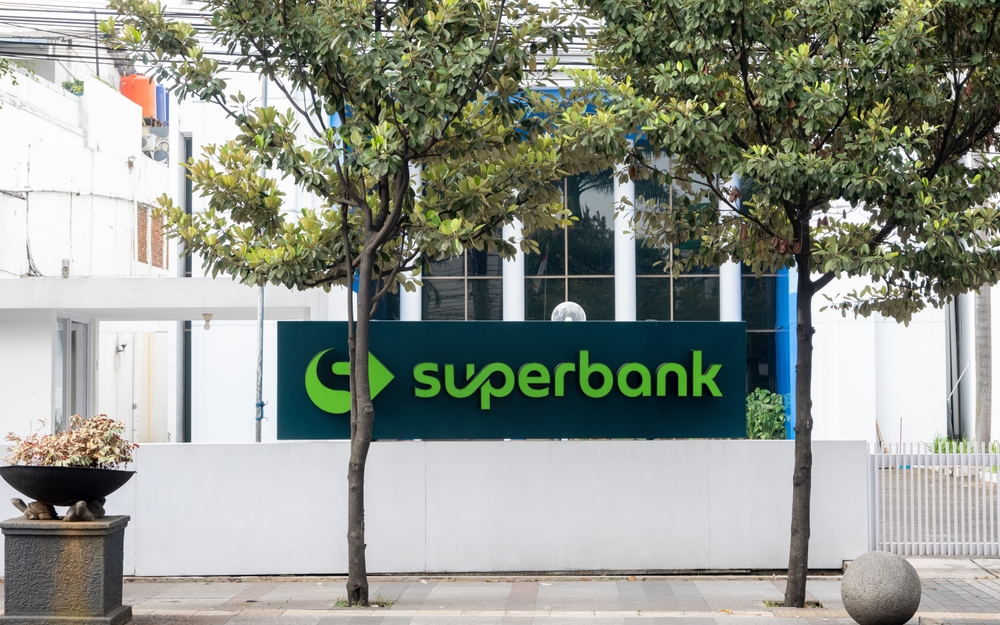
A Strong Earnings Print Draws Attention
Superbank net profit became one of the most closely watched banking stories in Indonesia on July 29, 2026, after Bloomberg Technoz reported that PT Super Bank Indonesia Tbk, ticker SUPA, booked net income of Rp182.6 billion in the first half of 2026. The same report said that profit was almost nine times higher than the roughly Rp20.5 billion earned in the same period a year earlier. That kind of jump is not just a good headline. It signals that Superbank’s growth story is moving from fast expansion toward clearer earnings traction.
The number also matters because Superbank is still a relatively young public company. Its investor materials say the bank completed its IPO in 2025 and has positioned itself as a digital-focused bank built around an ecosystem model. The company’s public pages describe it as licensed and supervised by OJK and Bank Indonesia, and a member of LPS, which is important for trust in a market where digital banking still has to prove durability as well as speed.
What Drove The Improvement
The most important driver behind the Superbank net profit improvement is not a single line item. It is the combination of fast loan growth, rising assets, and a growing customer base. In the company’s official investor overview, total loans reached Rp9.618 trillion in 2025, while total assets rose to Rp21.282 trillion and third-party funds climbed to Rp11.827 trillion. Net interest income also reached Rp1.576 trillion in 2025, which shows the business has been scaling its core banking engine rather than relying only on one-off gains.
That backdrop helps explain why the first-half 2026 result looked so strong. Superbank said in May that it had already posted profit before tax of Rp142 billion through April 2026, up 1,528.8 percent year on year, with total assets at Rp24.0 trillion and loans at Rp12.2 trillion. The bank also said loan growth was one of the main forces behind the result. When those figures are read together, the June half-year profit looks like a continuation of momentum rather than an isolated spike.
Why The Market Is Paying Close Attention
Investors are watching Superbank net profit closely because digital banks are often judged on two things at once: growth speed and the quality of that growth. Superbank has been expanding quickly, but Bloomberg Technoz also reported that the bank booked around Rp217.48 billion in write-offs for uncollectible loans during the first half of 2026. The article noted that the amount was already close to 75 percent of the write-offs the bank recorded for the full previous year. That is a reminder that fast lending growth can bring credit risk with it.
Still, the write-off number does not erase the earnings story. Instead, it adds context. A bank that is pushing credit aggressively may need to absorb more losses early while building a larger loan book. The key question for the market is whether those losses are being managed prudently and whether future revenue can outpace them. In Superbank’s case, the combination of strong asset growth, larger customer adoption, and rising profit suggests the model is still working, even if the risk profile is becoming more visible.
The Ecosystem Model Remains Central
Superbank’s growth has long been tied to an ecosystem strategy rather than a pure standalone banking push. The company’s LinkedIn profile says it is built to make financial access simpler, faster, and more inclusive, and emphasizes an ecosystem-driven approach supported by partners such as Grab-OVO, Emtek, KakaoBank, and GXS. Its Google Play listing also describes the bank as part of Emtek, Grab, Singtel, and KakaoBank, and notes features such as QRIS payments, free transfers, and savings products designed for everyday use.
That matters because digital banking growth is usually cheaper and stickier when it comes through an ecosystem. Customers do not just open an account and leave it idle. They use the bank through rides, wallets, transfers, savings, and lending products. Superbank’s official materials also say the bank reached one million customers in less than two months after public launch, then grew to more than six million customers by early 2026. That scale helps explain why Superbank net profit is accelerating so quickly.
How Superbank Is Building Revenue Depth
One reason Superbank net profit is improving is that the bank is not relying on one product to do all the heavy lifting. Its official deposit page shows a structured savings and deposit ecosystem, including Deposito with rates up to 7.5 percent per year and a minimum placement of Rp500,000, plus Celengan by Superbank, which offers savings features with rates up to 10 percent per year. The app also highlights QRIS payments, no admin fees, and up to 200 free transfers per month. That combination supports both acquisition and retention.
The revenue logic here is straightforward. A bank that can attract deposits at scale can fund more lending. A bank that can embed products inside a familiar digital ecosystem can also reduce customer acquisition costs. Superbank’s 2025 financial summary showed net interest margin at 10.64 percent, return on assets at 0.92 percent, and return on equity at 1.97 percent, all signs that the underlying profitability engine was already improving before the latest half-year update. The new Superbank net profit figure suggests that trend has continued into 2026.
A Banking Story Beyond The Headline Number
It is tempting to focus only on the percentage jump in Superbank net profit, but the broader story is more useful. This is a bank that transformed from Bank Fama, founded in 1993, into a digital-first institution with a new identity, a public listing, and an ecosystem-heavy operating model. Its 2025 annual report says the company’s business is built around technology adoption, strong governance, and more inclusive financial services. That framing helps explain why Superbank is being watched not just as a lender, but as a digital banking platform.
The market will probably judge the next phase on whether Superbank can keep lifting profit without letting credit costs get ahead of growth. For now, the company has shown that the model can produce meaningful earnings, not just user growth. The first-half 2026 result also strengthens the case that the bank is moving through the difficult stage where rapid expansion starts to translate into real shareholder value. That is the point where Superbank net profit becomes more than a quarterly statistic. It becomes proof that the strategy is working.
What To Watch Next
The next reporting cycle will matter a great deal. Investors will want to know whether loan growth remains strong, whether write-offs stay manageable, and whether deposit growth keeps pace with lending expansion. They will also watch whether Superbank can maintain healthy margins while staying disciplined on risk. Because the bank is still in an expansion phase, every new earnings release will be read as a test of sustainability, not just a measure of momentum.
For now, the message is clear. Superbank net profit has moved from early promise to a more convincing growth story. The bank is scaling, the ecosystem is working, and the market has a fresh reason to pay attention. The only real question left is how smoothly that growth can continue in the second half of 2026.
Read More