





 Wednesday, 29-07-26








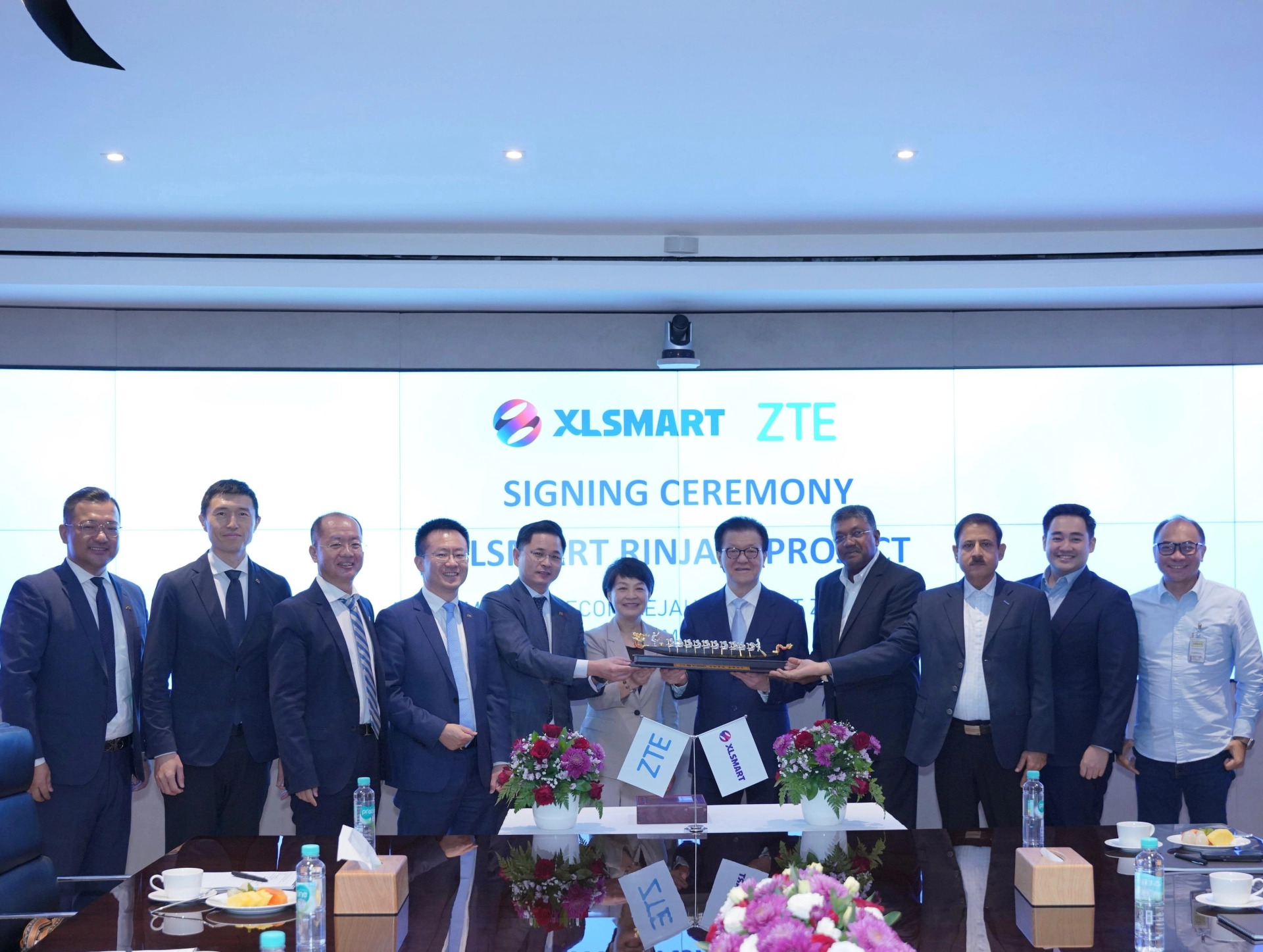
A Partnership Built For Faster, Smarter Networks
XLSMART and ZTE are pushing their cooperation beyond a standard vendor relationship and into a deeper network transformation play. The two companies have expanded their collaboration to accelerate AI-powered 5G and FWA development in Indonesia, with the goal of improving network intelligence, raising efficiency, and creating new broadband opportunities for both households and businesses. Related reporting says the partnership is focused on AI-native network operations, better energy use, and a stronger commercial path for Fixed Wireless Access.
That is a meaningful move for XLSMART because the company now operates as a merged telecom group with a nationwide footprint and a combined customer base of more than 69.4 million users. Its official company profile shows a portfolio that includes XL, XL Prioritas, XL SATU, Smartfren, and Axis, which gives it a broad base across mobile, home broadband, and premium connectivity segments. In practical terms, this means any upgrade in network intelligence can have a wide commercial impact very quickly.
Why AI-Powered 5G And FWA Matter Right Now
The timing of this partnership is important. Indonesian telecom operators are under pressure to deliver faster service, improve customer experience, and do it all while keeping operating costs under control. AI-powered 5G and FWA fit neatly into that challenge because they can help networks adjust in real time, automate traffic management, and reduce the waste that often comes with rigid legacy planning. ZTE’s own press release says the collaboration is intended to advance AI-powered 5G and FWA in Indonesia, while local reporting highlights the same themes of efficiency, sustainability, and broader broadband access.
For XLSMART, the strategic logic is straightforward. The company already has a broad retail and home broadband presence, so the next frontier is not just more coverage, but smarter coverage. That is where AI-powered 5G and FWA become commercially interesting. AI helps the network sense load, forecast traffic spikes, and allocate resources with more precision. FWA, meanwhile, gives operators a way to serve areas and customers that may not be practical for fiber deployment. Together, they create a scalable path for growth.
How AI Is Being Used Inside The Network
The technical heart of the collaboration is the use of end-to-end AI across multiple layers of the network. Reporting on the partnership says ZTE is bringing AI into Radio Access Network, Transport Network, Core Network, and network operations, so the system can analyze conditions in real time and automatically adjust resources when demand changes. That is the kind of architecture that can reduce operational friction and improve service consistency at the same time.
This matters because telecom networks are no longer judged only by speed tests. They are also judged by latency, reliability, uptime, and how well they behave during peak usage periods. AI-powered 5G and FWA are designed to respond to those demands more intelligently than traditional rule-based systems. The benefit is not just for engineers. Customers experience fewer disruptions, better responsiveness, and more stable broadband performance during busy periods. That is why the partnership is being framed as a network modernization step rather than a simple product launch.
There is also a sustainability angle. One of the most concrete results reported from the existing collaboration is AI Energy Saving, which the companies say has produced energy savings of more than 10 percent without compromising service quality. In a sector where power consumption can quickly become a major operating expense, that is a strong proof point. It suggests AI is not only improving performance, but also helping the operator run a leaner, greener network.
FWA Could Open New Broadband Growth
Fixed Wireless Access is emerging as a serious growth engine inside this story. Rather than relying on fixed fiber lines, FWA uses wireless infrastructure to deliver broadband to homes and businesses. In the Indonesian context, that is particularly attractive because it can help extend fast internet service to areas where fiber rollout is expensive, slow, or physically difficult. Local reporting says the ZTE and XLSMART strategy is explicitly aimed at expanding FWA through network optimization, improved CPE devices, and better home connectivity.
This makes AI-powered 5G and FWA especially relevant for residential broadband. XLSMART has already positioned XL SATU as a data and home broadband solution, which makes the company well placed to push fixed wireless offerings into the consumer market. If the network can deliver stable performance while staying cost efficient, FWA can become a practical alternative for households that want high speed internet without waiting for fiber expansion.
The commercial upside is not limited to households. The partnership also points to new opportunities for small businesses and enterprise users that need reliable broadband but may not sit on the right side of a fiber map. That is where AI-powered 5G and FWA can complement each other. The 5G layer provides the speed and flexibility, while the AI layer helps keep the service efficient and adaptive. Together, they create a stronger foundation for digital services across more customer segments.
What The Partnership Says About Indonesia’s Telecom Market
The collaboration also reflects a broader shift in Indonesia’s telecom market. The competition is moving away from pure coverage wars and toward network quality, efficiency, and service intelligence. ZTE says Indonesia is one of the fastest-growing digital markets in Southeast Asia, which helps explain why the company is betting on deeper strategic cooperation here. For ZTE, the move strengthens its role as a technology enabler. For XLSMART, it supports a push to extract more value from the network assets it already has in place.
ZTE’s official newsroom also suggests the company is positioning Indonesia as an important market in a wider 5G and AI roadmap. That matters because telecom partnerships now tend to be judged not only by immediate commercial results, but also by how well they fit the operator’s long-term transformation plan. In this case, AI-powered 5G and FWA are not side projects. They are part of the operating model the two companies want to build over time.
For XLSMART, the benefits could be even broader if the rollout continues to scale. The company’s official website emphasizes its commitment to good corporate governance and digital innovation, while its brand portfolio shows it already serves different usage tiers, from mass-market mobile to premium and home broadband. That gives the operator a strong base for cross-selling, network monetization, and more targeted broadband offers.
The Bigger Picture For 2026 And Beyond
Looking ahead, the most interesting part of this partnership is not just the technology itself, but the operating discipline behind it. If AI can consistently lower energy use, improve network reliability, and support FWA expansion, then the model becomes repeatable. That creates a stronger business case for future network investments and helps justify more intelligent infrastructure spending. Reporting on the collaboration says both companies plan to keep exploring new use cases for AI-driven networks, 5G evolution, and FWA development.
There is also a clear market message here. Telecom growth in Indonesia will increasingly depend on how well operators can balance capacity, cost, and customer experience. AI-powered 5G and FWA are one way to do that. They allow operators to extend broadband access, automate complex network tasks, and make the economics of expansion more favorable. That is why this story matters beyond a single partnership announcement. It is a sign of where the industry is heading.
In that sense, the XLSMART and ZTE collaboration is a useful snapshot of the next telecom phase in Indonesia. It is about smarter infrastructure, more flexible broadband delivery, and a network that can do more with less. If the early energy savings are any indication, AI-powered 5G and FWA may become a major part of how operators think about scale, sustainability, and growth in the years ahead.
Read More