





 Tuesday, 24-11-26









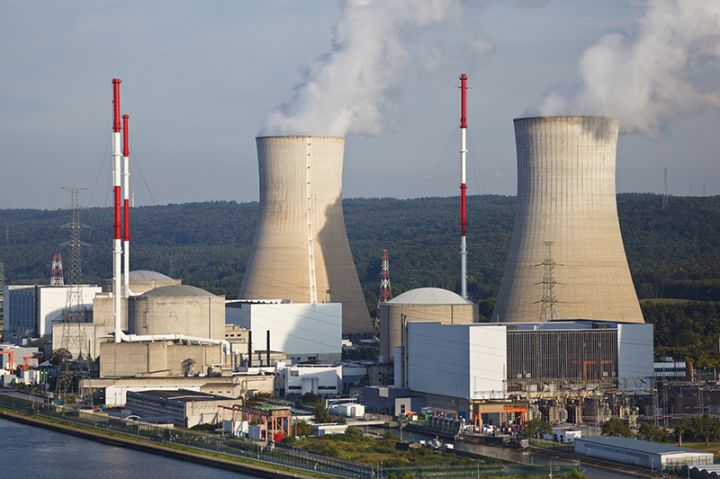
The global energy landscape has entered a period of profound structural transformation following the severe supply disruptions of 2026. According to the International Energy Agency (IEA) flagship World Energy Outlook 2026, released in November 2026, geopolitical instability and maritime chokepoint blockades have forced governments worldwide to rethink their long term electricity strategies. Specifically, the severe disruption to oil and liquefied natural gas (LNG) shipments through the Strait of Hormuz has exposed the acute vulnerability of nations that depend heavily on imported fossil fuels. In response to what IEA Executive Director Fatih Birol described as the largest energy supply shock in modern history, policymakers are rapidly turning toward domestic, reliable baseload generation. Consequently, the development of a new Nuclear Power Plant is no longer viewed merely as a climate mitigation tool, but as an indispensable pillar of national energy security.
The Strategic Resurgence Of The Nuclear Power Plant
For decades following major industrial accidents and cost overruns in Western markets, atomic energy faced stagnation and public skepticism. However, the 2026 energy shock has fundamentally altered risk calculations in capitals across Asia, Europe, and North America. Three quarters of the global population resides in countries that are net importers of oil and natural gas, and more than four billion people live in economies that rely on the Strait of Hormuz for over 30 percent of their crude oil supplies. When cumulative supply losses in the Gulf reached 2.8 billion barrels of oil and 60 billion cubic meters of natural gas, pushing diesel prices past 200 US dollars per barrel, the economic perils of fuel import dependency became undeniable.
Unlike coal or gas fired generators that require continuous, vulnerable maritime fuel deliveries, a modern Nuclear Power Plant operates on high density uranium fuel assemblies that only need replenishment every 18 to 24 months. This fuel resilience allows utilities to stockpile years of energy supply within a compact, secure facility. As a result, more than 50 countries have now established concrete national targets or active regulatory frameworks to introduce or expand atomic generation. By mid 2026, nearly 90 gigawatts (GW) of new reactor capacity was actively under construction globally, marking the highest buildout volume recorded in more than 35 years.
Global Capacity Projections And Regional Construction Trends
Data from the World Energy Outlook 2026 illustrates a dramatic upward revision in long term atomic power trajectories. Under the IEA Current Policies Scenario, global atomic electricity generation capacity is projected to reach 825 gigawatts electric (GWe) by 2050. This expansion is driven by both reactor lifetime extensions in advanced economies and aggressive new construction across emerging Asian markets.
Current construction data highlights a clear geographic concentration in engineering and supply chain execution:
- China and East Asia: China remains the undisputed global leader in reactor deployment, accounting for nine of the ten global construction starts recorded in 2025 alone, representing 12.2 GW of newly initiated capacity. Over the past decade, 94 percent of all reactors entering construction globally have utilized Chinese or Russian reactor designs, demonstrating how standardized domestic supply chains accelerate project timelines.
- North America and Data Center Demand: In the United States, surging electricity consumption from artificial intelligence computing clusters and hyperscale data centers has prompted technology giants to sign direct power procurement agreements. More than 40 GW of advanced reactor projects in North America are now linked to corporate clean energy commitments from major cloud and software providers.
- Southeast Asia and Emerging Economies: Developing economies across the Asia Pacific region, which suffered severe fiscal strain from spiking fossil fuel import bills during the 2026 crisis, are accelerating feasibility studies. Nations such as Indonesia, the Philippines, and Vietnam are actively evaluating how a domestic Nuclear Power Plant can stabilize industrial power tariffs while meeting net zero carbon commitments.
The Rise Of Small Modular Reactors And Advanced Designs
While traditional gigawatt scale reactors continue to anchor baseload grids, much of the renewed enthusiasm documented by the IEA centers on Small Modular Reactors (SMRs). Conventional large scale facilities require massive upfront capital expenditure, complex site engineering, and multi year construction schedules that often deter private financiers. Furthermore, extreme heatwaves and severe droughts during the summer of 2026 demonstrated that legacy coastal and river cooled reactors can face operational curtailment when ambient water temperatures rise.
Small Modular Reactors address many of these structural bottlenecks by utilizing standardized, factory fabricated components that can be transported to project sites and assembled rapidly. Typically generating up to 300 megawatts electric (MWe) per unit, SMRs offer modular scalability, allowing utilities to add capacity incrementally as regional electricity demand grows. Commercial frontrunners are already moving from blueprints to concrete. China is actively constructing a 125 MWe commercial onshore SMR, while Russia is advancing a 300 MWe modular design. Simultaneously, regulatory licensing is nearing completion for first of a kind SMR deployments in Canada, South Korea, the United Kingdom, and the United States. Next generation designs, including high temperature gas cooled reactors and molten salt microreactors, also eliminate reliance on massive river cooling systems, making them viable for arid regions and retired coal plant sites.
Balancing Grid Reliability With Surging Electricity Demand
The push to build every new Nuclear Power Plant is occurring alongside an unprecedented surge in global power consumption. According to IEA projections, total global electricity demand will expand by 10,500 terawatt hours by 2035, an increase equivalent to the entire current electricity consumption of all advanced economies combined. Three primary structural forces are driving this consumption spike: the rapid electrification of transportation through electric vehicles, the exponential expansion of artificial intelligence data centers, and soaring air conditioning loads. For the first time in recorded history, global electricity demand for space cooling is overtaking heating demand, accounting for up to 30 percent of peak grid load during summer months.
Although renewable technologies such as solar photovoltaics and wind turbines are projected to supply between 45 and 50 percent of global electricity by 2035, weather dependent generation creates significant grid balancing challenges. When solar output drops at sunset or wind speeds calm during high pressure weather events, power grids require firm, dispatchable baseload capacity to prevent blackouts. Nuclear generation currently provides roughly one quarter of the world's low carbon electricity and achieved an all time global generation record in 2025. Pairing variable renewable energy with firm atomic baseload capacity, supported by a projected 75 percent surge in global electrical grid investment over the next decade, offers the most reliable pathway to deep decarbonization without sacrificing grid stability.
Overcoming Financing And Regulatory Hurdles
Despite overwhelming strategic momentum, transforming ambitious government targets into operating reactors requires overcoming persistent financial and institutional obstacles. Because atomic projects are heavily capital intensive upfront while enjoying low fuel and operating costs over a 60 to 80 year lifespan, high interest rates and uncertain revenue structures can inflate total project costs.
To unlock institutional capital from pension funds, sovereign wealth funds, and development banks, the IEA emphasizes that governments must establish clear risk sharing frameworks. Proven mechanisms include regulated asset base models, long term contracts for difference, and sovereign loan guarantees that shield developers from construction delays outside their control. Additionally, international nuclear regulators are working to harmonize reactor design certifications so that a safety license approved in one jurisdiction can be recognized across borders without costly redesigns. By combining disciplined project management, standardized modular manufacturing, and supportive financing policies, the global energy sector is turning the crisis of 2026 into a durable foundation for clean, sovereign, and uninterrupted electricity generation.
Read More