


 Friday, 30-10-26


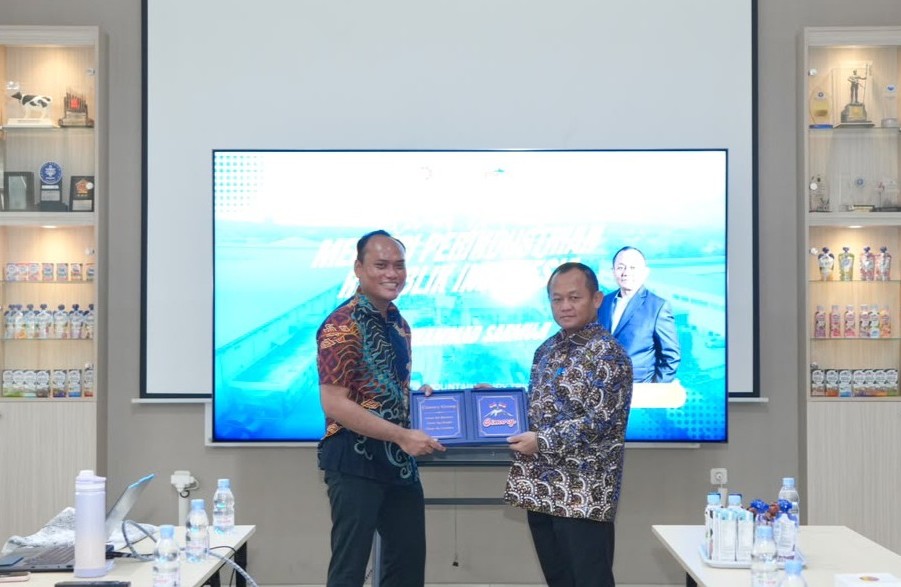
Indonesia's Minister of Industry, Muhammad Sarmuji, has challenged the national dairy processing industry to diversify its products, increase the use of domestic raw materials, and optimize production capacity during a visit to PT Cisarua Mountain Dairy Tbk (Cimory) in Sentul, Bogor Regency, West Java (22/10).
The initiative aims to increase added value, expand markets, and strengthen the manufacturing sector's contribution to the national economy. Sarmuji also encouraged Cimory to develop more dairy-based products, including ice cream and Indonesian-style cheese, within the next year.
Indonesia Pushes Dairy Industry to Expand Product Diversification
Sarmuji said Cimory had developed beyond its original reputation as a yogurt producer by expanding its product range. He encouraged the company to continue developing products that match the characteristics and preferences of Indonesian consumers.
“We visited the Cimory factory today. Initially, we knew Cimory as a yogurt producer, but it has now developed through various product diversifications. Today, we challenged Cimory to produce more dairy-based products, such as ice cream and Indonesian-style cheese,” Sarmuji said.
He highlighted the market potential for cheese products with distinctive Indonesian flavors, noting that this category had not been widely developed.
“Cheese that suits Indonesian tastes has not been widely developed. If Indonesian-style cheese can be produced, it may become more popular, and the market opportunity is wide open. The same applies to ice cream and other dairy-based products,” he said.
Beyond product diversification, Sarmuji emphasized the need to increase national industrial capacity utilization, which currently remains below its potential.
He said industrial utilization was approaching 70% and could be increased to 80–85% using existing production capacity. According to him, higher utilization could significantly increase the manufacturing sector's contribution to gross domestic product (GDP).
Achieving this target requires sufficient raw material supplies at competitive prices. The Ministry of Industry has committed to ensuring the availability of industrial raw materials, including providing import flexibility for materials that cannot yet be supplied domestically.
Sarmuji stressed that domestic raw materials should remain the priority whenever they are available and can be produced in Indonesia.
Indonesia Targets Higher Local Milk Production and Stronger Dairy Farmers
The government is also seeking to reduce the national dairy industry's dependence on imported milk by strengthening the domestic dairy farming sector.
Sarmuji said developing the dairy industry requires improvements in the national dairy cattle population, farmer productivity, and the quality of locally produced fresh milk.
“We hope milk can be produced as much as possible domestically. Ideally, what we import are the cows, which would then be raised by Indonesian farmers. The farmers should receive training and education so they can produce larger quantities of high-quality milk. That would be better,” he said.
According to Ministry of Industry data, Indonesia's dairy processing industry required approximately 4.95 million tons of fresh milk equivalent in 2025, with around 80% of its raw material requirements still supplied through imports.
To address this dependence, the ministry is strengthening partnerships between dairy processing companies, cooperatives, and local farmers. The initiatives include cooling technology support, digitalization of milk collection centers, and restructuring programs for industrial machinery and equipment.
As of 2026, digitalization had been implemented at 96 milk collection centers across nine cooperatives in West Java and East Java, involving more than 12,000 dairy farmers.
Sarmuji also appreciated Cimory's contribution to purchasing fresh milk from local farmers. Throughout 2025, the company partnered with 18,458 dairy farmers and absorbed approximately 26.42 million liters of domestic fresh milk.
Cimory Responds to Government's Dairy Product Innovation Challenge
Cimory welcomed the minister's challenge to expand its dairy product diversification and develop products suited to the Indonesian market.
Pamungkas Bayu Triprasetyo, Manufacturing Director of PT Cisarua Mountain Dairy Tbk, said innovation was an important part of the company's business development strategy. The company would assess opportunities to develop additional dairy-based products.
“Cimory has carried out many innovations, and of course, we will take on the challenge of developing new products. We will not focus only on liquid milk products but will also review various other dairy-based products that have the potential to be developed in Indonesia,” Pamungkas said.
Regarding domestic raw material utilization, Pamungkas explained that approximately 20–30% of Cimory's milk requirements were currently supplied by local fresh milk producers in West Java and East Java.
“We absorb around 20–30% of our total milk requirements. This absorption is already quite optimal because fresh milk supplies in Indonesia remain very limited. To meet our remaining needs, we still use imported milk powder,” he said.
He added that increasing domestic fresh milk production was an important factor in supporting the development of the national dairy processing industry.
Indonesia's Food and Beverage Industry Grows 6.77%
The Ministry of Industry also reported positive growth in Indonesia's food and beverage industry during the first half of 2026.
The subsector recorded growth of 6.77% and contributed 41.86% to the GDP of the non-oil and gas manufacturing industry.
Investment in the food and beverage industry reached Rp47.74 trillion during the first half of 2026. This consisted of Rp19.46 trillion in foreign direct investment (FDI) and Rp28.28 trillion in domestic investment.
Sarmuji also recognized Cimory's achievements at the Indonesia Halal Industry Awards (IHYA) 2026. The company received First Place in the Best Halal Beverage Industry category for large-scale industries.
The minister also appreciated Cimory's contribution to employing graduates from vocational education institutions supported by the Ministry of Industry.
During the visit, Sarmuji met graduates of SMK-SMAK Bogor and Politeknik AKA Bogor, as well as internship participants from Politeknik AKA Bogor who were working and undertaking internships at Cimory.
He asked about their experiences during their employment and internship programs. Sarmuji emphasized that cooperation between vocational education institutions and industry was important for preparing competent workers who were ready to enter the workforce.
He also appreciated companies that provide opportunities for students and graduates to gain practical experience in the industrial sector.
PHOTO: MINISTRY OF INDUSTRY
This article was created with AI assistance.
We make every effort to ensure the accuracy of our content, some information may be incorrect or outdated. Please let us know of any corrections at [email protected].
Read More