





 Thursday, 30-04-26








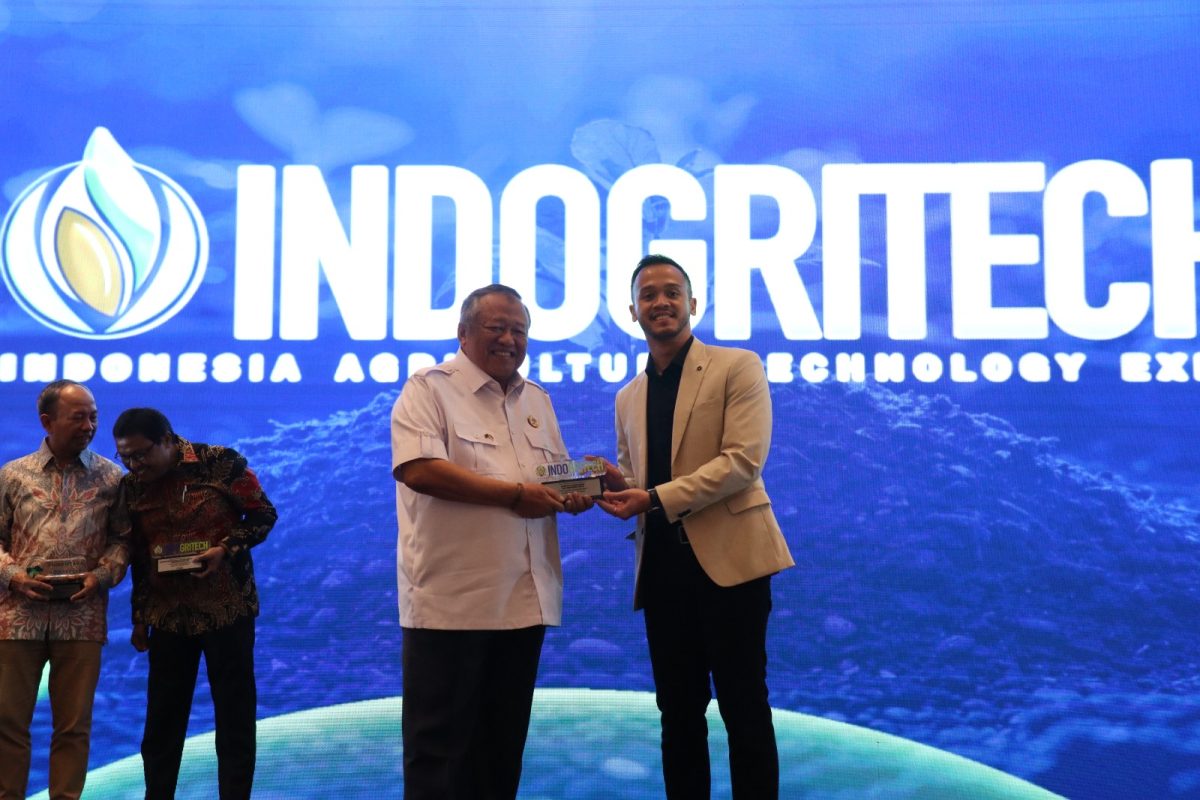
Indonesia’s agricultural sector is entering a more technology-driven phase, and the official launch of IndoGriTech Expo 2026 is one of the clearest signals yet. The event, launched by PT Debindo Global Expo in Jakarta on 29 April 2026, is designed as a platform that brings together government, industry, academia, and innovators in one ecosystem. According to Media Perkebunan, the exhibition will take place on 4 to 7 November 2026 at Hall 5, ICE BSD City, and is being positioned as a strategic space to support national food self-sufficiency.
The timing is important. Indonesia is trying to modernize farming while keeping food supply stable, productive, and sustainable. That makes IndoGriTech Expo 2026 more than a trade fair. It is part of a larger push to connect innovation with policy, and policy with the real needs of farmers and agribusinesses. The event’s emphasis on sustainable agriculture, post-harvest solutions, renewable energy, and waste processing shows that the sector is moving beyond basic production toward an integrated agricultural value chain.
Why IndoGriTech Expo 2026 Matters For National Food Security
The strongest argument for IndoGriTech Expo 2026 is that it responds to a structural challenge: Indonesian agriculture must become more efficient without losing its social role. Media Perkebunan reported that the exhibition is being framed as a support platform for government programs in agriculture, with the goal of strengthening sustainable food resilience. That means the event is meant to serve not only business interests, but also the wider national agenda around food independence and long-term resilience.
This matters because modern agriculture now depends on more than land and labor. It depends on digital tools, irrigation systems, smart machinery, crop inputs, and logistics that can preserve quality after harvest. The expo’s product mix reflects that reality. According to the article, participating categories will include food and crop seed, horticulture and floriculture, fertilizers and agricultural chemicals, tractors and farm machinery, agritech, plantation commodities, post-harvest and storage solutions, renewable energy, and agricultural waste processing. That breadth shows how IndoGriTech Expo 2026 is trying to capture the whole ecosystem, not just one part of it.
There is also a symbolic layer. By aligning the event with the broader Indonesia Emas 2045 vision, organizers are placing agriculture inside the national development conversation, not outside it. That is significant because food security is often discussed as a short-term supply issue when it is actually a long-term competitiveness issue. Productivity, farmer welfare, and sustainability will all depend on whether Indonesia can upgrade its agricultural infrastructure fast enough. IndoGriTech Expo 2026 is meant to accelerate that conversation into action.
A Platform Built Around Collaboration, Not Just Exhibition
What sets IndoGriTech Expo 2026 apart is its collaborative format. Media Perkebunan reported that the exhibition is designed to bring together government institutions, business players, academics, and technology innovators. That matters because agricultural transformation rarely happens when each group works in isolation. Farmers need access to tools and knowledge. Companies need clear demand signals. Policymakers need input from the field. Research institutions need channels to move from theory into practice.
The event is also built around business matching, industrial forums, expert sharing sessions, and live technology demonstrations. Those program elements may sound familiar, but they are useful because they turn a passive exhibition into a transaction-driven platform. In practical terms, that means farmers and buyers can interact directly with suppliers, while investors and institutional partners can identify scalable ideas more easily. For a sector as fragmented as agriculture, that kind of structured encounter can be more valuable than a static product hall.
Several flagship programs are also planned, including the Nusantara Food Summit, the IPB Stakeholder Forum, and a collaborative program with HKTI. The article also mentions the SapaTani Roadshow as a pre-event activity intended to strengthen outreach and sectoral engagement. Together, these programs suggest that IndoGriTech Expo 2026 is being designed as a year-round platform rather than a one-off event. That approach increases the chance that conversations at the expo can continue into field implementation and commercial partnerships.
The Business Case Behind The Expo
For the private sector, IndoGriTech Expo 2026 is attractive because agriculture is no longer a low-tech sector with limited upside. The article states that more than 100 national and international brands are targeted to participate, bringing solutions across farm machinery, digital agriculture, water management, processing technology, and environmentally friendly farming systems. That kind of participation suggests that the market sees real commercial potential in Indonesian agritech.
The business case extends beyond product sales. Indonesia’s agricultural sector also needs supply chain upgrading, better post-harvest handling, and stronger downstream processing. Those are areas where technology providers, input suppliers, and processing companies can all find value. The presence of renewable energy and waste processing categories shows that the market is also paying attention to circular economy models, which could matter for both cost efficiency and environmental compliance. IndoGriTech Expo 2026 is therefore as much about industrial upgrading as it is about display.
The launch ceremony itself further reinforces this business orientation. Media Perkebunan reported that PT Debindo Global Expo signed memorandums of understanding with HKTI, ALSINTANI, and ABII during the launch. Those agreements are more than ceremonial. They point to a deliberate effort to build institutional support around the event and to create a durable network for agricultural technology adoption. In a sector where trust and access matter, these partnerships can help convert exhibition energy into real implementation.
There is also an important link to the livestock sector. The article says the launch of IndoGriTech Expo 2026 took place alongside the launch of Nusantara Livestock and Poultry Expo 2026. That simultaneous rollout indicates an effort to create synergies between agriculture and livestock within one broader platform. For investors and industry players, that is useful because feed, crop production, animal production, logistics, and processing are deeply connected in the real economy.
What This Means For Farmers And The Wider Agribusiness Ecosystem
For farmers, the practical value of IndoGriTech Expo 2026 will depend on whether the event improves access to affordable, relevant, and scalable solutions. That could include better seeds, more efficient tools, smarter irrigation, lower waste, improved storage, and more energy-efficient equipment. The article quotes HKTI leadership as saying the expo should help farmers access agricultural necessities more effectively and sustainably. That is a crucial benchmark, because an expo only matters if it changes conditions on the ground.
The same applies to downstream industry. Indonesia has long talked about boosting agricultural value addition, but progress depends on more than policy slogans. It requires coordination among production, distribution, processing, and technology adoption. The event’s focus on post-harvest solutions and downstream strengthening suggests that IndoGriTech Expo 2026 is trying to move the conversation toward industrial value creation rather than raw-output dependence. That is a meaningful shift for a country seeking stronger food resilience and better rural incomes.
In broader terms, the expo may help close the gap between the promise of agritech and its actual uptake. Many innovations never scale because they remain disconnected from the end users who need them most. By creating a forum for demonstrations, discussion, and business matching, IndoGriTech Expo 2026 tries to shorten that distance. If successful, the event could help normalize a new model of Indonesian agriculture that is more modern, data-informed, and commercially connected.
A Signal Of Where Indonesian Agriculture Is Heading
The launch of IndoGriTech Expo 2026 suggests that Indonesian agriculture is no longer being framed solely as a production problem. It is being framed as a systems problem involving technology, logistics, financing, sustainability, and collaboration. That is a more mature way to think about the sector, and it is one that fits the needs of a country trying to improve food security while building a stronger economic base.
The event’s emphasis on modern farming, sustainability, innovation, and cross-sector partnerships gives it weight beyond the exhibition calendar. It reflects a wider recognition that food independence will not come from one policy, one technology, or one institution. It will come from coordinated execution across the entire ecosystem. In that sense, IndoGriTech Expo 2026 is not just a launch. It is a marker of where Indonesian agribusiness wants to go next.
Read More